Books about them
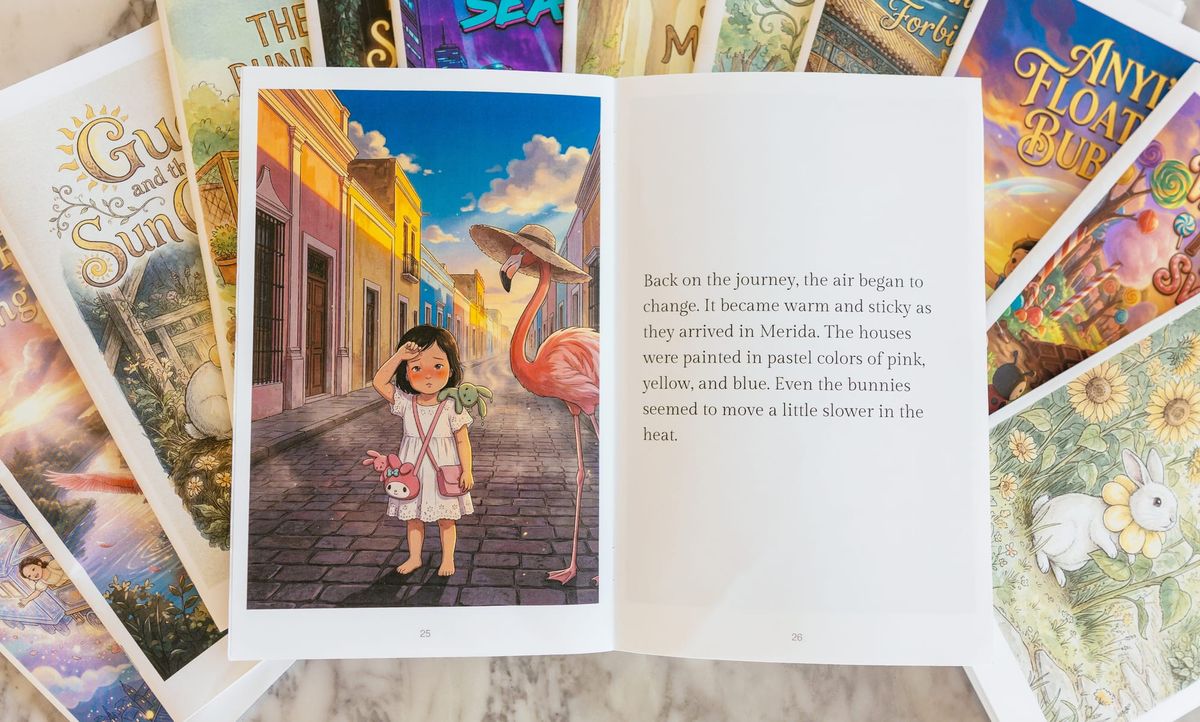
We have two young kids — Lanye is three, Anyi is one — and we try to keep them off screens. They spend a lot of time with books, and we spend a lot of time taking photos of them doing the things they love. A little while ago, we and a new AI agent started turning those photos into illustrated, narrated, printable storybooks where our kids are the heroes. There are around forty of these books on the shelf now.
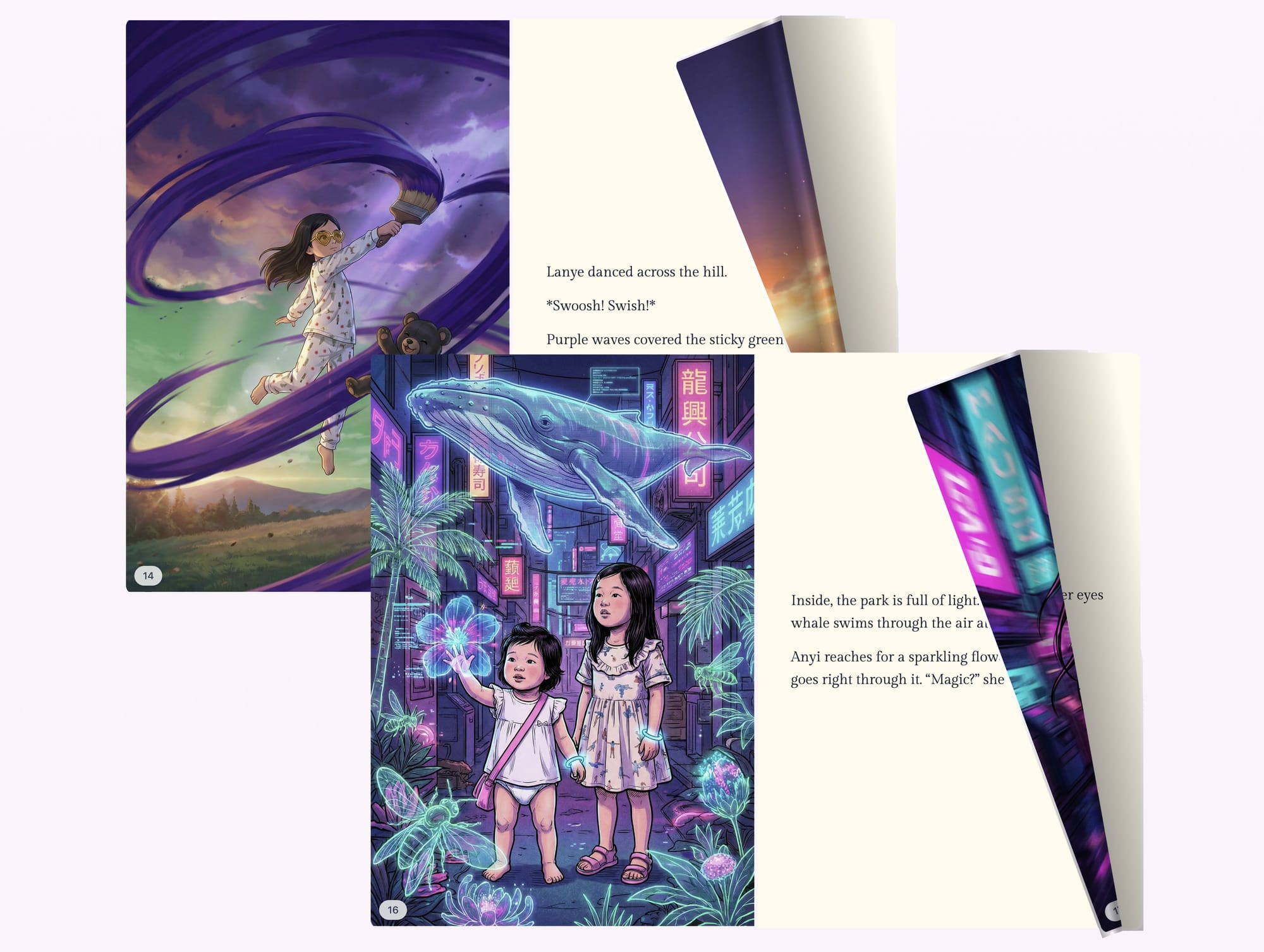
They reread their favorites at bedtime. We get through eight or ten books before they fall asleep. Lanye keeps coming back to the one where she finds a giant paintbrush in the grass and paints over the whole sky. Anyi keeps reaching for the cyberpunk one, where she and Lanye chase a glitching Robo-Bunny through a neon-lit city of flying cars.
Why this happened
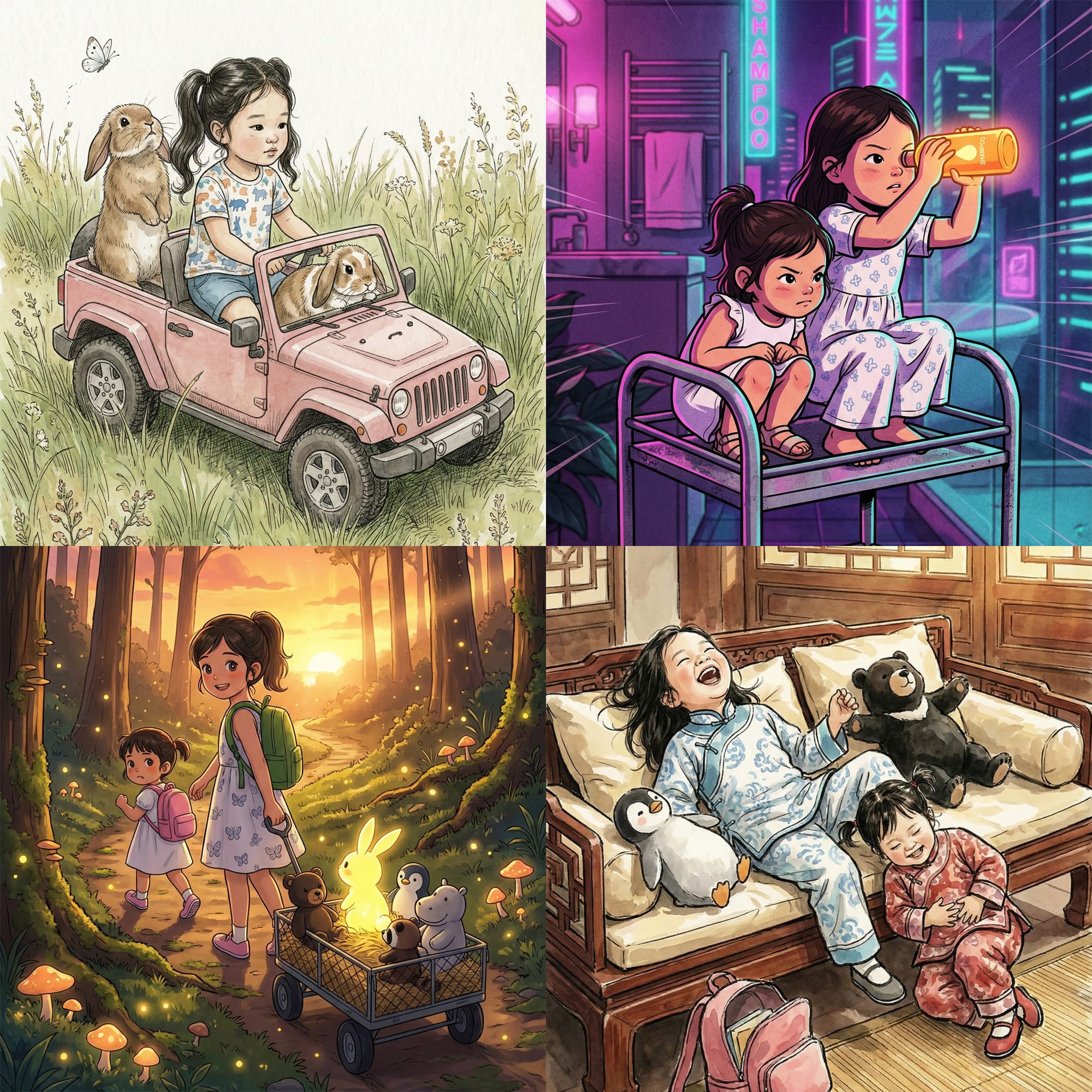
Our bookshelf had wonderful books on it, but they were all about other people, animals, and kids. There was nothing about our bathroom-floor pirate game, or our four rabbits, or our stuffed dog/capybara who spends his book trying to figure out whether his voice is supposed to bark or squeak, or our pink ride-on jeep on the patio that Lanye inspects with the seriousness of a real mechanic.
What we wanted was the kind of book where our kid is the hero. The princess, the captain, the explorer — opening the cover and realizing the story is actually about her, drawn in art she'd want her room painted in.
Two books from one collar
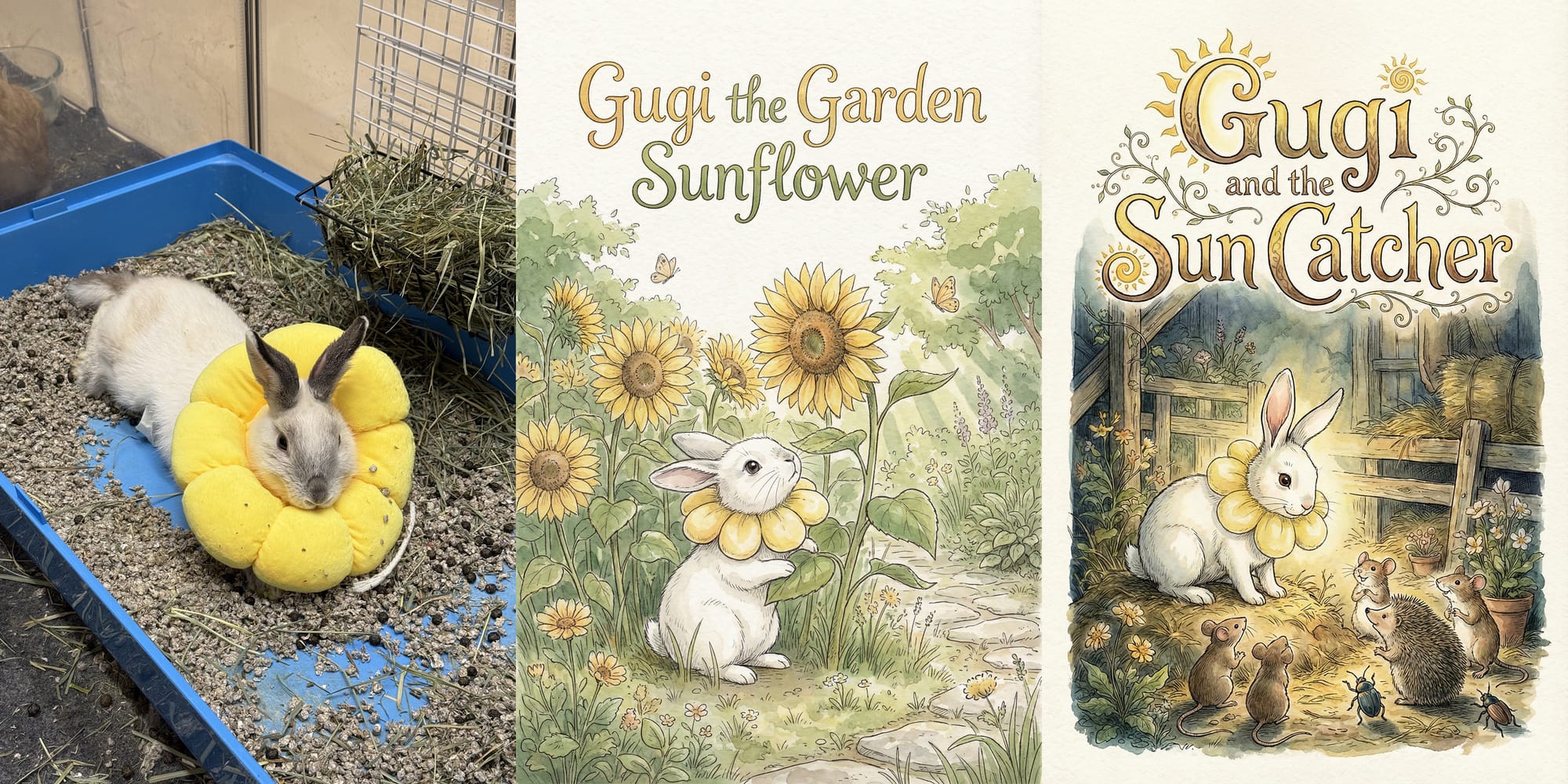
When our smallest white rabbit had to wear an inflatable flower collar after an injury, the agent made two books out of it. In one, she decides she's a sunflower, plants herself in the garden bed, and tries to eat sunshine until her stomach growls. In the other, the collar glows brighter every time she helps another animal in the pen — by dusk she's a lantern on paws, leading a lost chipmunk out of the Shadowy Corner.
The first try took seven hours
We tried Gemini Storybook first. It's nice for generic kids in generic adventures, but the moment we tried it on our kid with her stuffed dog the cracks appeared — her face changed page to page, the dog became a different dog, and there was no flexibility on art style or tone.
So we did it ourselves. The first attempt was a story about Lanye's birth, a real nine months told as a magical one, and we generated page after page by hand in nano banana pro, watching our daughter become a different daughter every spread, the same teddy bear rendered in four different palettes, her surroundings repainted on every turn. To print the book, we painstakingly laid the story out in Affinity Publisher, one page at a time. Seven hours later we had one book that more or less held together.
A book lands in the kids' hands ten minutes after I have the idea now, including the time it takes the printer to spit it out.
How it works
I upload a photo, pick an art style, and the agent does the rest. It comes back with ten storyline options and I pick one — for the bathroom photo, I picked the laundry-cart pirates. From there the agent writes the plot and page text, generates every illustration and the cover using the best image models, and narrates the whole book in any of twenty-one voices. It can even animate each page into a short video clip.
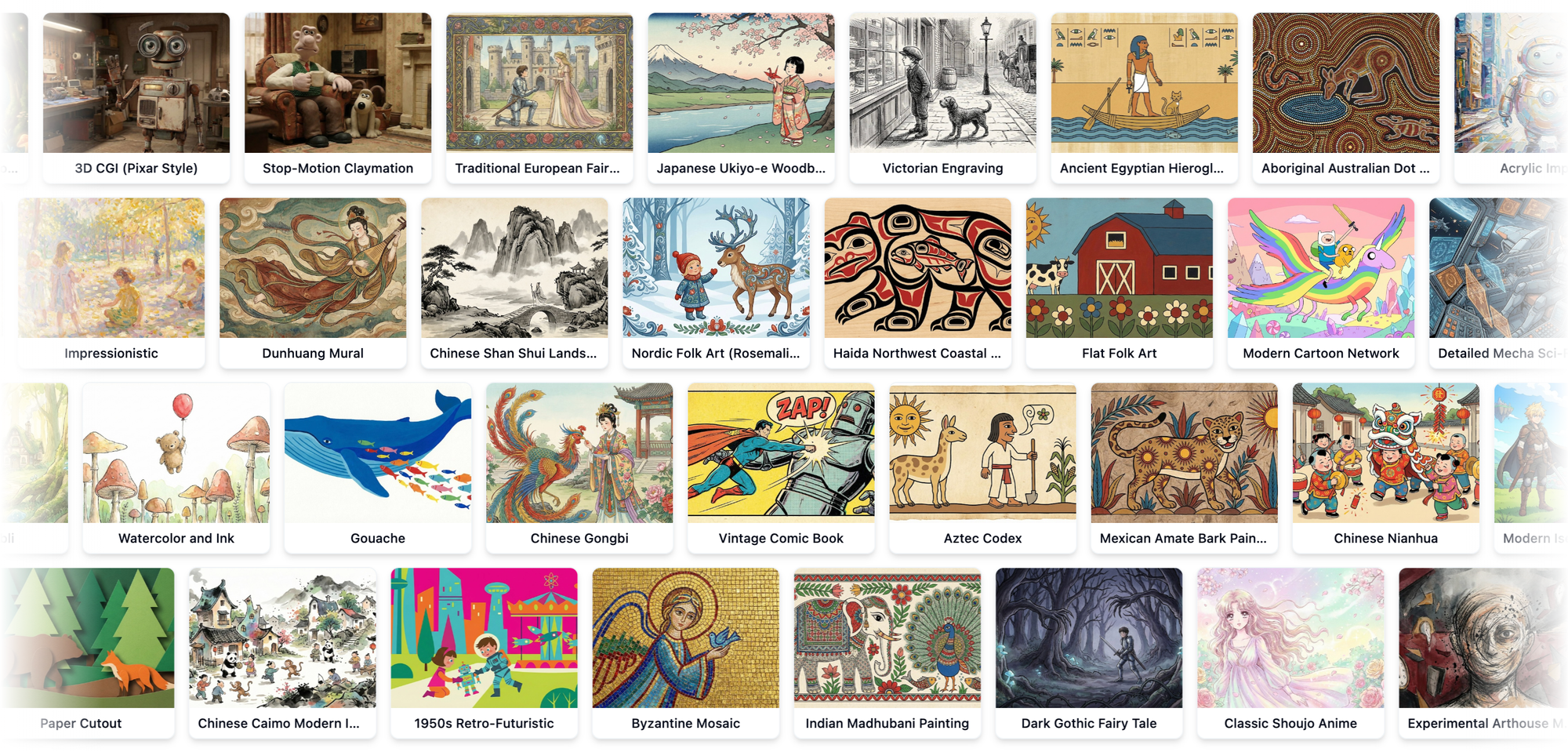
The kids' taste has surprised me. They gravitate toward the painterly and cinematic styles — shoujo anime, Makoto Shinkai, Chinese ink-and-color, watercolor and ink. Pixar has never come up.
The hard part
The whole pitch is your kid gets to be the hero, so the agent's job is making sure she actually is — same face, same hair, same stuffed friend on her lap — every page, every spread, every style. That's harder than it sounds. A toddler on page one drifts into a completely different adult by page eight if nothing's anchoring her. The dress she's wearing in a Mexico City afternoon scene becomes a parka by page eight when the story moves to a Beijing winter, with no story reason for the change.
What the kids actually get
A part to play.
Lanye has been a safari mechanic in a watercolor backyard, the captain of a laundry cart on a neon-lit marble sea, a block-tower architect in a glowing high-rise, a princess refusing bedtime under a face-of-the-moon, a Chinese-ink professor running an animal class with her hands curled into "finger glasses." Anyi has helped a lost flamingo find his way home — across Mexico to the lagoon where his flock waits.
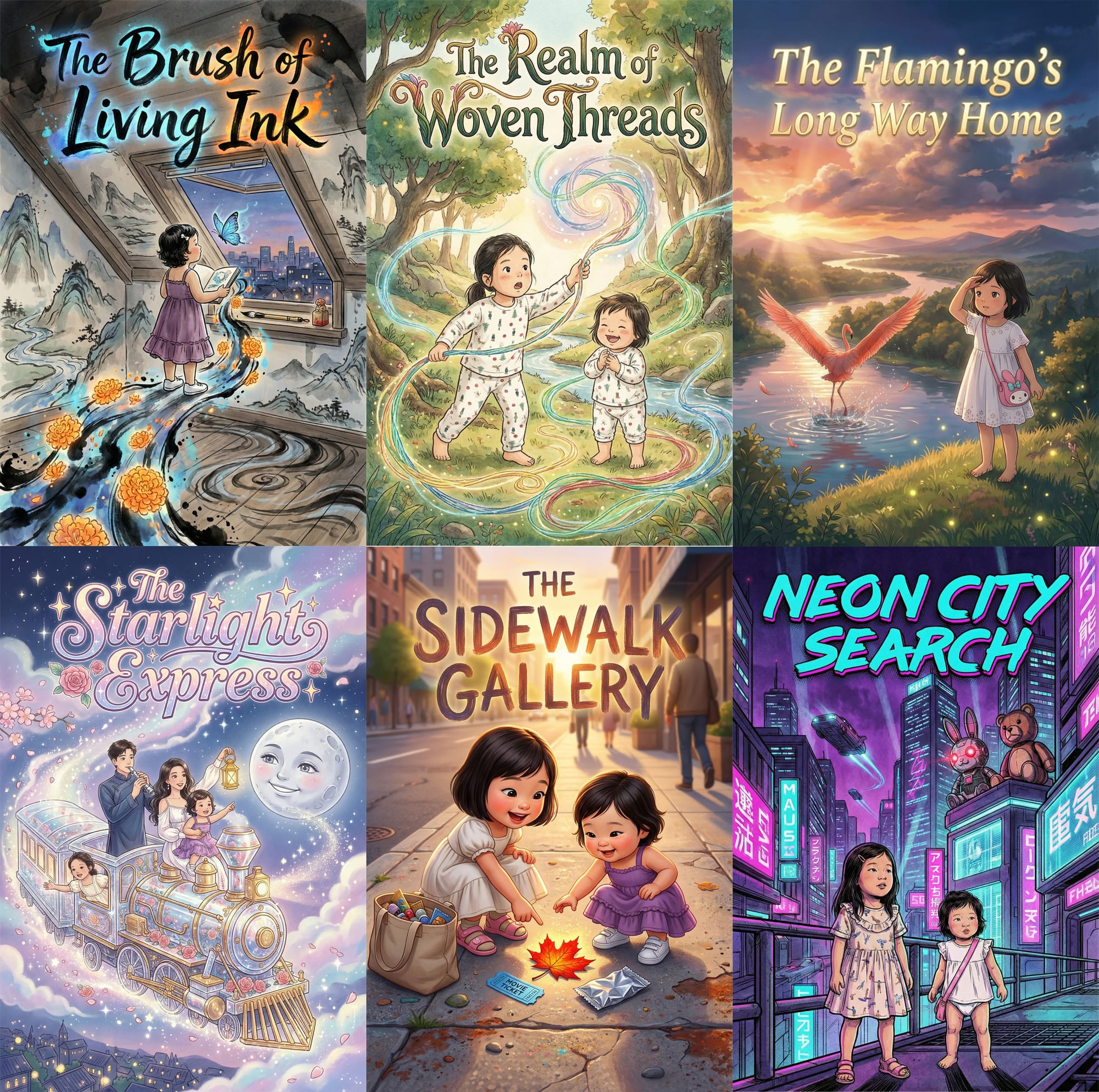
Our stuffed animals get to be leads too. Our stuffed dog/capybara got the existential voice-crisis book. Cash, a friend's actual Newfoundland dog, got his own book — he wears a teal-and-terracotta poncho through Mexico City while mariachi musicians play behind. Our pets show up as themselves — the rabbits actually look like our rabbits.
The writing surprised me too. One of the books imagines Anyi arriving in Beijing from Mexico City — invented, but bridging two places that matter to our family. It opens like this:
"Anyi sat on a sealed cardboard box, her legs swinging in the unfamiliar air. Downstairs, the rhythm of Beijing life hummed — bicycle bells, distant construction, and the sharp sizzle of garlic in a wok — sounds so different from the car horns and Mariachi trumpets of Mexico City."
A children's book about a life lived across two places, written by an agent that knows them both.
The reveal at the end
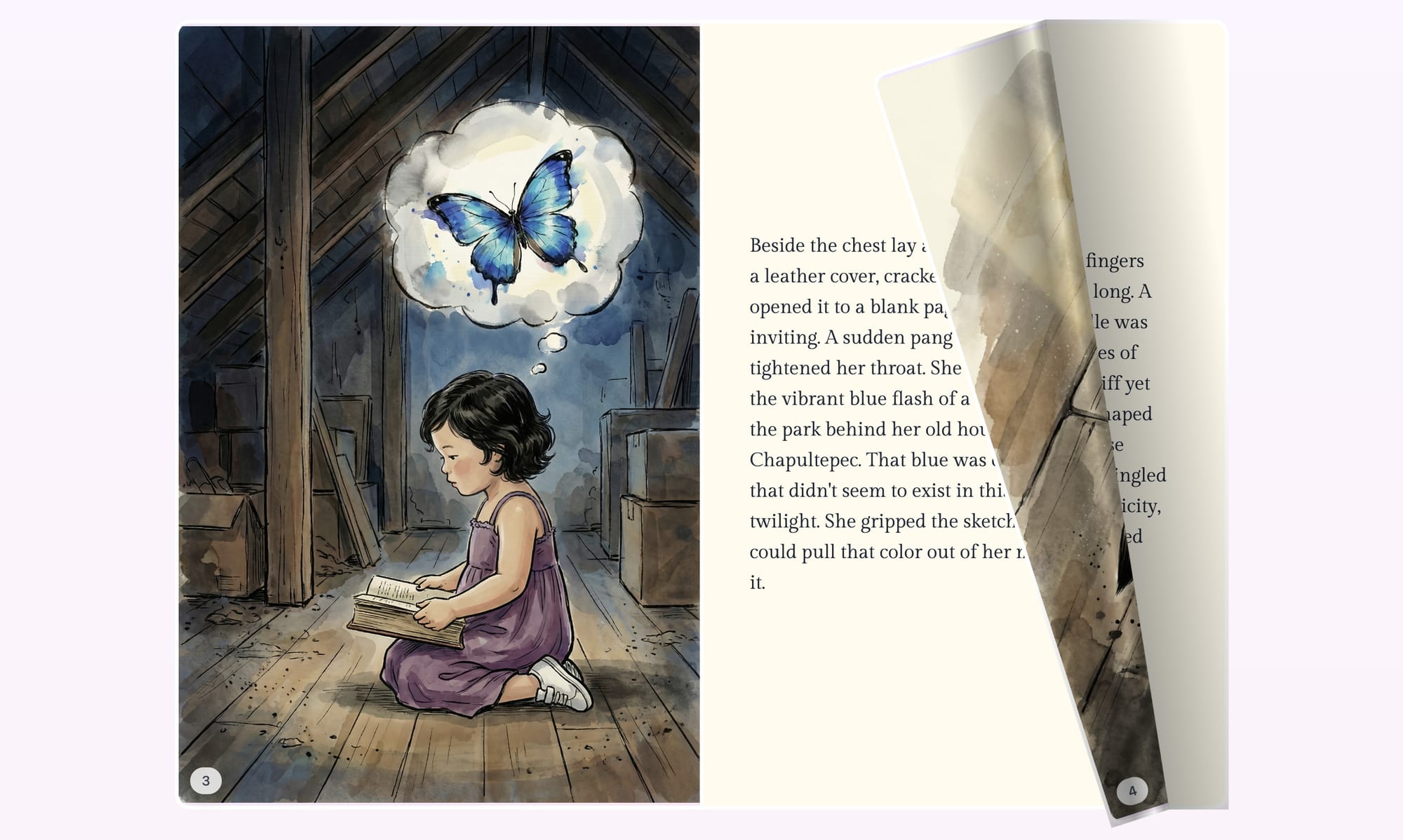
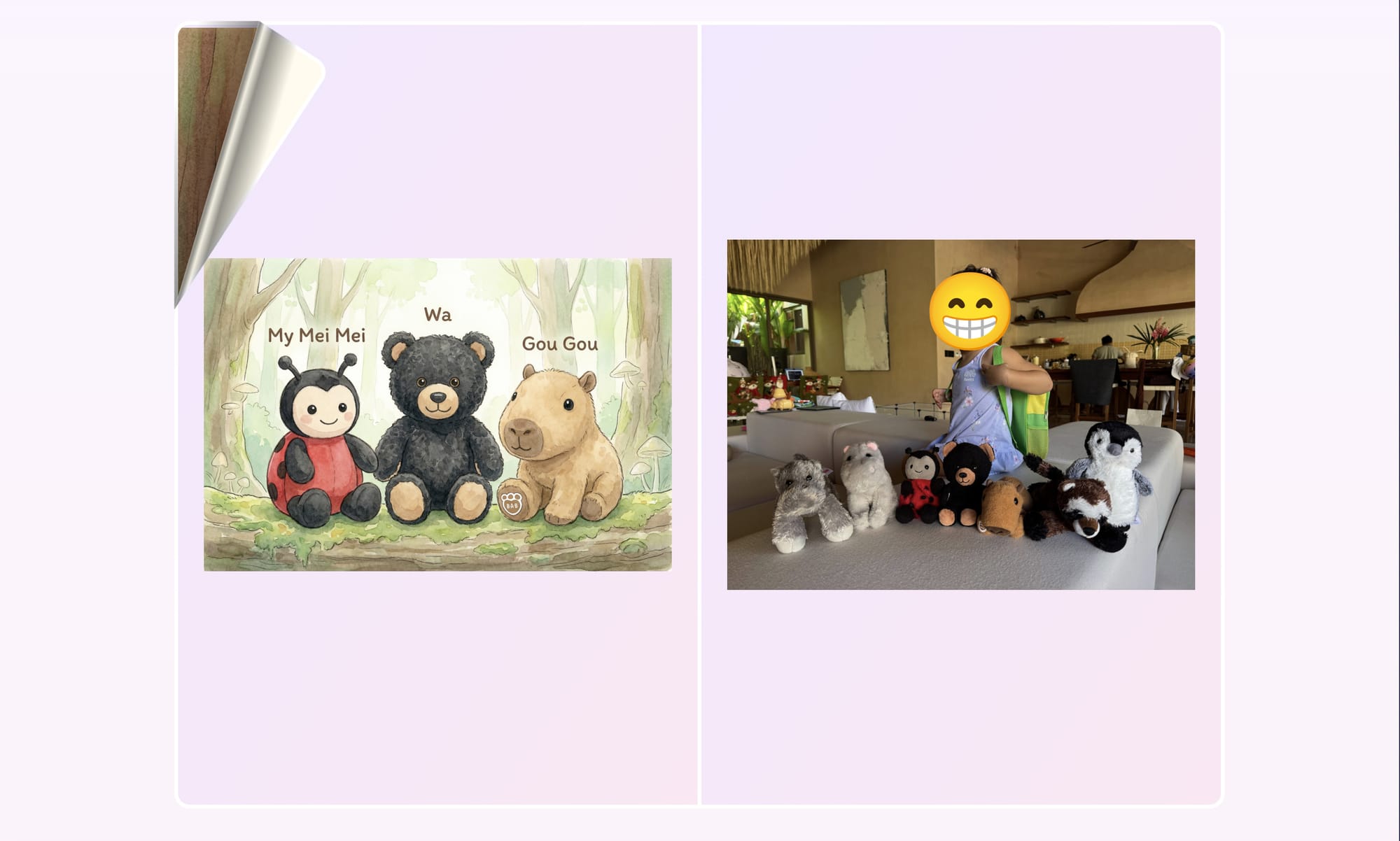
The last page of every book is the source photos — the actual ones, from my phone, that the story was generated from. The kid reads ten or twenty pages of fantasy, turns the last page, and there's a regular Tuesday afternoon: our pink ride-on jeep on the patio, a stuffed friend on the seat, our rabbit eating from a bowl, the photos that became the book she just read. She flips back to page one, reads it again, looks at the photos again, reads it a third time.
The booklets we print at home need page counts in multiples of four, which would otherwise mean blank padding pages at the back. The agent fills them with the source photos.
What it's done for us
Twenty or thirty of their favorite books come on flights now, in the carry-on, lighter than a single hardcover. We don't have to pick which ones to leave behind. If a book gets covered in spaghetti sauce on Tuesday, we reprint it Wednesday morning, and the book that comes back is the same book.
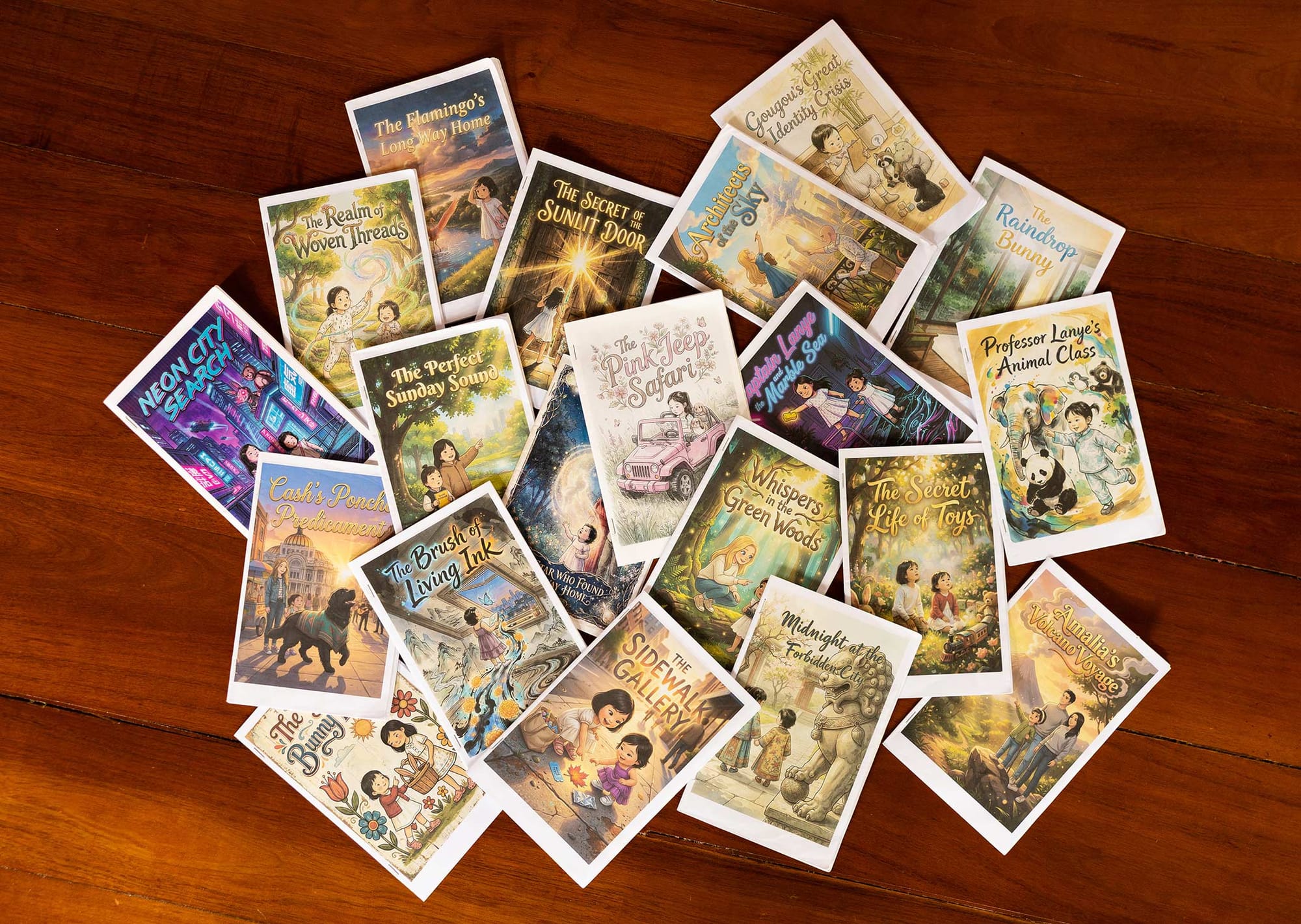
These days, whenever one of them is doing something — building a fort on the rug, sitting solemnly with a stuffed friend in her arms, bravely confronting a tiger behind glass at the zoo — I find myself daydreaming about all the different books that photo could turn into.
AI in family life doesn't have to mean more screens. For us it's meant more books — off the screen, in their hands, with them on every page.